Introduction:
At InSan Jukyeom, bamboo salt isn’t just a product—it’s a tradition steeped in meticulous craftsmanship and a profound respect for nature. From sun-drenched sea salt fields to roaring wood-fired kilns, every stage of our ninefold baking process is designed to preserve purity, amplify flavor, and harness the health-enhancing power of bamboo salt.
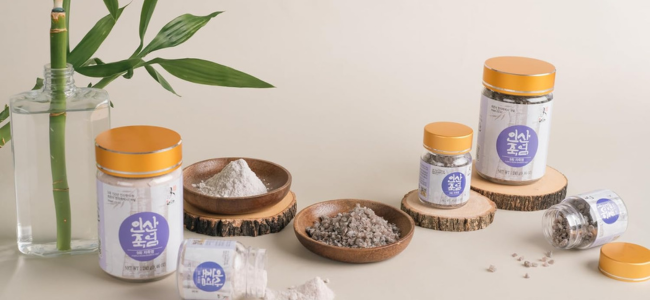
The Nine-Stage Production Process of Bamboo Salt
- Harvesting Sea Salt from the West Coast
We begin with natural sea salt, harvested from the pristine salt flats along Korea’s West coast. - Removal of Bittern (Gan-su) Over Time
The salt is stored indoors within woven straw sacks for three years, allowing bittern—containing minerals and impurities—to settle at the bottom and gradually drain away. - Preparing Thick Bamboo Tubes
We select thick, mature bamboo harvested from the Jeolla region and Jiri-san. The bamboo is split into segments, each segment carefully prepared to become a tube. Bamboo naturally contains sulfur compounds that contribute to the unique character of the finished salt. - Packing & Compacting the Salt
The de-bittered sea salt is tightly packed into the bamboo tubes by hand—no machines. Each layer is compressed to ensure every granule has minimal air gaps, which is vital for even heating and optimal mineral transfer. - Sealing with Loess Clay (Hwangto)
Once filled, the bamboo tubes are sealed using thick yellow clay (loess) collected from pollution-free mountain environments. This seal preserves the salt’s integrity and prevents external contaminants during baking. 인산죽염(주) - Firing with Pinewood in Iron Kilns
The sealed bamboo tubes are loaded into iron kilns, heated exclusively with pinewood fires. Pine not only burns cleanly but imparts subtle aromatic compounds and assists in achieving the required intensity of heat. - Solid Pillar Formation
As the fire intensifies, the bamboo casing, clay seal, and salt itself interact. The clay hardens, the bamboo components melt into the salt, transforming it into a solid pillar—signal that the process is well underway. - Grinding and Re-Baking Repeatedly (8 Cycles)
After the first firing, the salt pillar is ground into powder, re-packed into bamboo tubes, resealed, and fired again. This grind-and-bake cycle is repeated eight times, each time refining texture and deepening flavor. - The Final (Ninth) High-Heat Treatment
The last stage uses a specially-built high-heat furnace—capable of exceeding 1700°C—to bring the salt to a molten, near-metallic state. This extreme heat burns off residual impurities and fully matures the bamboo salt’s structure. After cooling for 24 hours, the resulting hardened “salt ore” is crushed; the lower blackened portion is discarded. The remainder is processed into either coarse grains or fine powder, then packaged.
Conclusion:
From sea to flame, bamboo salt production at InSan Jukyeom is a labor-intensive pilgrimage towards purity. Every step—aging, packing, firing, grinding—works together to create a salt that’s rich in mineral content, vibrant in aroma, and steeped in heritage. It’s not just salt; it’s a testament to patience, precision, and the power of natural processes.
Ready to experience the benefits of bamboo salt yourself? Visit our official store at bamboosalt.com